
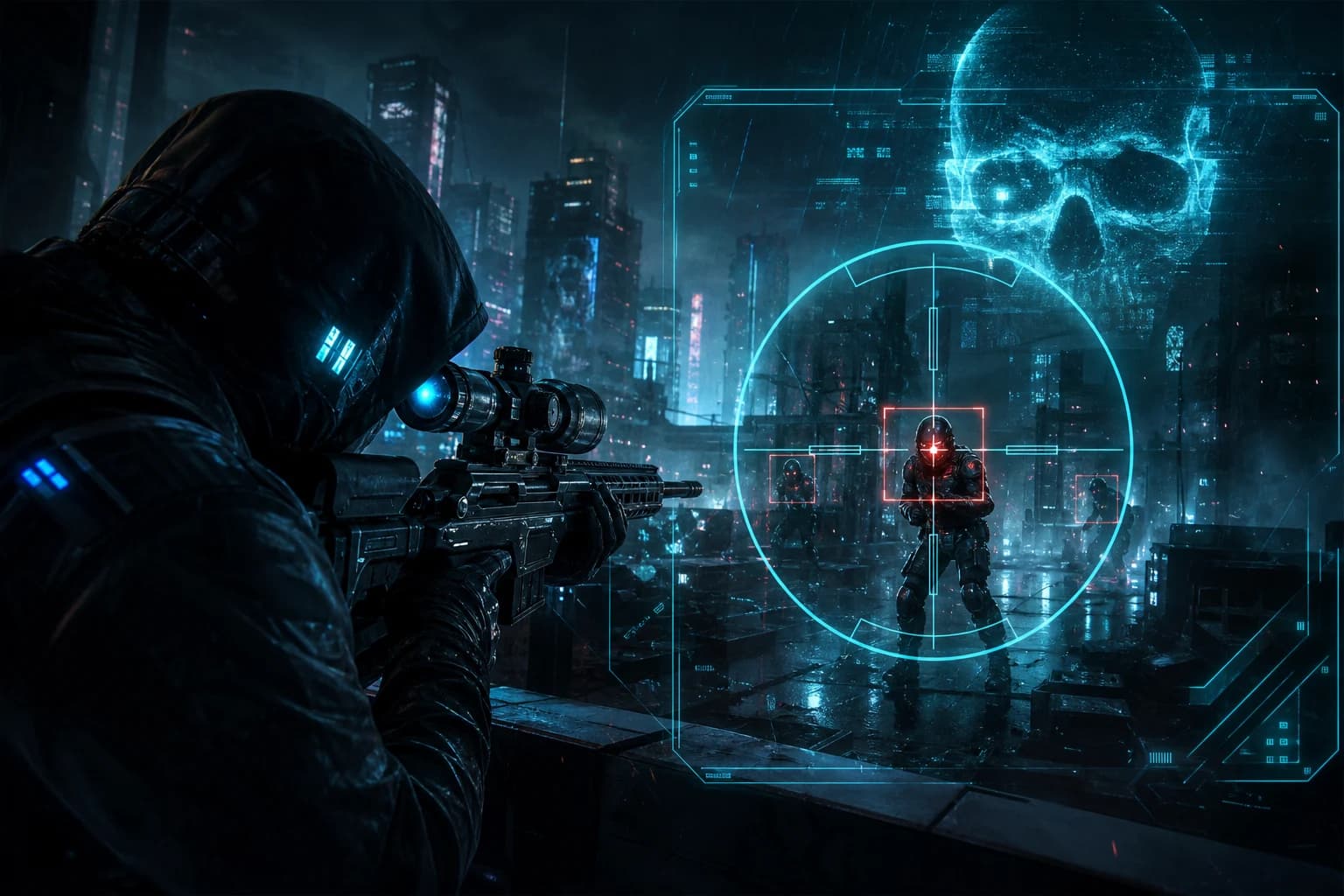




What is Triggerbot? Technical Structure and Game Mechanics
- Introduction: What is Triggerbot and Why Is It So Widely Discussed?
- Technical Foundations of Triggerbot
- Pixel Analysis Method
- Memory Reading Method
- How Triggerbot Works: Step-by-Step Technical Process
- Step 1: Defining the Target Detection Condition
- Step 2: Starting the Continuous Scanning Loop
- Step 3: Applying the Delay Parameter
- Step 4: Transmitting the Fire Command
- Step 5: Resetting the Condition and Returning to the Loop
- Step 6: Managing User Configuration Parameters
- Step 7: Integration of Anti-Cheat Bypass Layer
- Types of Triggerbot and Use Cases
- Pixel-Based Triggerbot
- Memory-Based Triggerbot
- Hybrid Triggerbot Systems
- Advantages and Risks of Triggerbot Use
- Technical Advantages
- Risks and Disadvantages
- Anti-Cheat Systems and Triggerbot Relationship
- Behavioral Analysis Systems
- Kernel-Level Detection
- Triggerbot Configuration: Best Practices
- Conclusion
- What is the fundamental difference between triggerbot and aimbot?
- How reliable is pixel-based triggerbot?
- Which games is triggerbot used in?
- Why is the delay parameter important?
- How do anti-cheat systems detect triggerbot?
- Does using triggerbot result in account ban?
Introduction: What is Triggerbot and Why Is It So Widely Discussed?
The moment you step into the world of competitive multiplayer gaming, you realize: The game is shaped not just by your keyboard and mouse speed, but by your reaction times, screen reading ability, and instant decision-making skills. Especially in first-person shooter (FPS) games, milliseconds can completely change the course of a match. This is precisely where the concept of "triggerbot" has become one of the most sought-after and debated topics in the world of game cheats.
Triggerbot, in its most basic definition, is a software component that automatically performs the firing action when a specific condition is met in the game — typically when the crosshair moves over a target. This structure differs from classic aimbot logic; while aimbot actively locks onto the target and moves the mouse in that direction, triggerbot only automates the "trigger pull" action. The user moves the mouse themselves; the software intervenes at the right moment and fires.
But how does this technical structure work? What methods does the software use to understand that it's "on target"? Pixel color analysis? Memory reading? Or more advanced image processing algorithms? The answers to these questions are crucial both for understanding game security systems and for grasping the technical evolution of cheat software.
The use of triggerbot in the gaming world is worth examining not only from a "cheating" perspective, but also from the standpoint of software engineering, image processing, and human-computer interaction. In this guide, we'll step-by-step explore what triggerbot is, how it works, what technical components it consists of, and how it relates to game security systems.
If you've previously read our guides on memory injection methods in game cheats or aimbot and wallhack strategies, you'll better understand triggerbot's place in this ecosystem. If you haven't, this guide will provide you with a solid technical foundation and make other content more meaningful.
If you're ready, let's start peeling back the technical architecture of triggerbot layer by layer.
Summary: Triggerbot is a cheat software component that automatically fires when the crosshair is over a target. It works through pixel analysis or memory reading. This guide comprehensively covers its technical structure, operational steps, advantage/risk balance, and frequently asked questions.
Technical Foundations of Triggerbot
Pixel Analysis Method
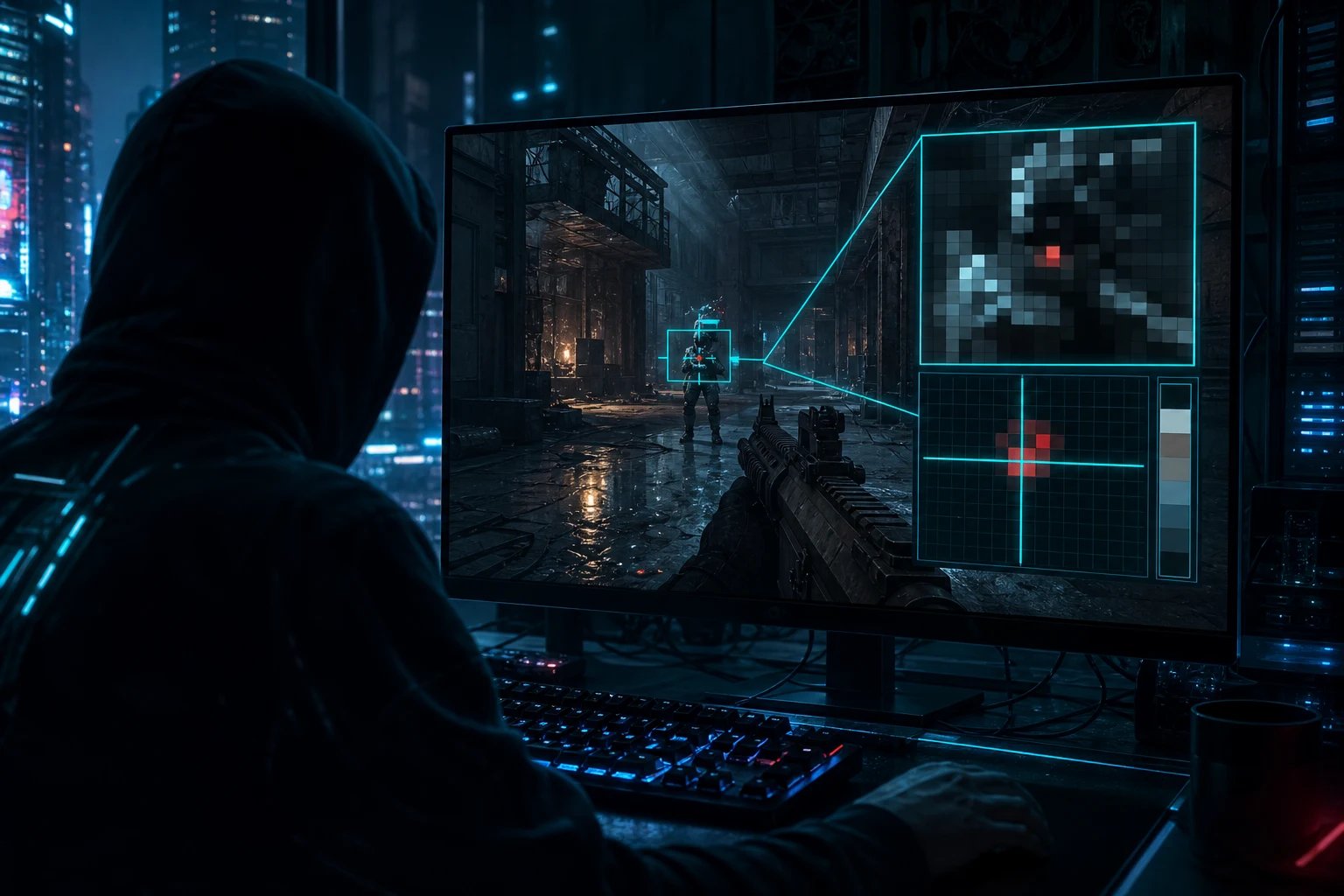
One of the most common and oldest working methods of triggerbot is pixel color analysis. In this approach, the software continuously scans a specific area of the screen — typically the exact center of the crosshair or a small area around it. Since enemy models in games have specific color palettes (especially the colors that the game engine renders for enemy hitboxes), the software sends a trigger command when it detects changes in these color values.
The pixel analysis method theoretically offers a less traceable approach since it doesn't directly touch game memory. However, the accuracy of this method is quite sensitive to screen resolution, the game's graphics settings, and background colors. False positive triggers are the biggest weakness of this method.
Memory Reading Method
More advanced triggerbot implementations perform target detection by reading the game's runtime memory. In this method, the software accesses entity lists in the game's process memory and directly calculates which entity the crosshair is over. This approach produces much more reliable results; however, it requires much more sophisticated techniques to stay under the radar of anti-cheat systems.
Memory reading-based triggerbots typically work in conjunction with memory injection techniques, and the integration of these two components forms the basic architecture of modern cheat software.
How Triggerbot Works: Step-by-Step Technical Process
-
Step 1: Defining the Target Detection Condition
For triggerbot to work, the condition of being "on target" must first be defined by the software. In systems using pixel analysis, this is the detection of specific RGB color ranges in the center area of the screen. In systems using memory reading, it's the detection of the situation where the "crosshair entity ID" value in the game's entity list is not empty. This condition definition is the foundation of all triggerbot logic, and incorrect configuration leads to both malfunction and excessive triggering.
-
Step 2: Starting the Continuous Scanning Loop
The software runs a continuous scanning loop (polling loop) in the background while the game is running. This loop checks the target detection condition hundreds or even thousands of times per second. The loop's frequency creates a critical balance point between latency and detection risk: Higher frequency scanning provides faster response but consumes system resources and may attract the attention of some anti-cheat systems.
-
Step 3: Applying the Delay Parameter
After a target is detected, triggerbot doesn't fire immediately — at least not well-designed ones. Instead, a random delay value is applied to simulate human reaction time. This delay is typically randomly selected between 50-200 milliseconds. This simulation is critical for making it difficult for anti-cheat systems that perform behavioral analysis to detect "superhuman reaction time."
-
Step 4: Transmitting the Fire Command
After the delay period is complete, the software sends the fire command by simulating a mouse click or by directly sending input to the game process. How this command is sent largely determines whether it will be detected by anti-cheat systems. Systems that perform hardware-level simulation are generally harder to detect than those operating at the software level.
-
Step 5: Resetting the Condition and Returning to the Loop
After the fire command is sent, the system resets the target detection condition and returns to the scanning loop. At this stage, some advanced triggerbot implementations apply a "cooldown" period; that is, they add a brief wait to prevent excessively rapid consecutive triggers. This both aligns with the weapon's in-game fire rate and reduces behavioral abnormality.
-
Step 6: Managing User Configuration Parameters
Modern triggerbot software offers users a wide range of configuration options: trigger zone size, delay ranges, which key activates it (toggle key), which team colors count as targets, and more. This configuration layer allows the software to be adapted to different games and different usage scenarios.
-
Step 7: Integration of Anti-Cheat Bypass Layer
In professional cheat software, the triggerbot component never works alone; it always comes with an anti-cheat bypass layer. This layer prevents the software from appearing in the process list, clears memory access traces, and minimizes behavioral fingerprints. Tools like Ph Spoofer form an important part of this bypass layer.
Types of Triggerbot and Use Cases
Pixel-Based Triggerbot
The simplest and oldest type of triggerbot. It works by reading screen pixels and doesn't touch game memory. Installation is straightforward and theoretically less traceable. However, its reliability is limited due to incorrect color detection. It performs better especially in environments with low graphics settings or in games with specific color schemes.
Pixel-based triggerbots are still widely used in PC emulator versions of mobile-based games like PUBG Mobile. Cougar Bypass is a good example of tools developed for such scenarios.
Memory-Based Triggerbot
This type, which works by reading game memory, offers much higher accuracy rates. It can definitively determine whether the target is truly under the crosshair, and won't accidentally target teammates or neutral entities. However, this power comes with a higher detection risk; because anti-cheat systems actively monitor memory reading attempts.
Hybrid Triggerbot Systems
Modern and professional cheat software typically uses hybrid systems that combine both methods. While primary target detection is done through memory reading, the verification layer is supported by pixel analysis. This dual-layer approach both increases accuracy and reduces dependence on a single detection vector.
In games with high-security anti-cheat systems like Valorant, such hybrid approaches are critical. The GANTE Full package contains such advanced components developed for Valorant.
Advantages and Risks of Triggerbot Use
Technical Advantages
The most basic advantage provided by triggerbot is exceeding the physical limits of human reaction time. While the average player's reaction time to visual stimulus is between 150-250 milliseconds, a triggerbot can theoretically reduce this to near-zero levels. In FPS games, this difference can be decisive, especially in high-tempo combat.
Additionally, since triggerbot doesn't touch the user's mouse control, it creates a much more "natural" looking gameplay profile compared to aimbot. Since the aiming movement is entirely the user's, it's harder to detect abnormality when observed by spectators or replay systems.
Risks and Disadvantages
Like all cheat software, triggerbot use carries serious risks. The most important risk is detection by anti-cheat systems. Systems like Vanguard (Valorant), VAC (CS2), and BattlEye (PUBG) are constantly updated and developing new detection methods. If detected, you may face a permanent account ban.
Technically, a misconfigured triggerbot can cause excessive triggering, leading to uncontrolled weapon discharge; this both ruins gameplay and makes the user much more conspicuous. Improper adjustment of delay parameters causes similar problems.
Considering all these risks, as we emphasized in our guide to the most effective strategies in game cheats, correct tool selection and careful configuration are critical.
Anti-Cheat Systems and Triggerbot Relationship
Behavioral Analysis Systems
Modern anti-cheat systems now focus not only on software detection but also on statistical analysis of player behavior. To detect triggerbot use, these systems examine the statistical distribution of firing timing. While human reaction times are distributed within a certain variance range, triggerbot use abnormally narrows or shifts this distribution.
For this reason, well-designed triggerbot software tries to simulate human behavior by adding randomness (jitter) to delay values. How realistic this simulation is directly determines the quality of the software.
Kernel-Level Detection
Anti-cheat systems operating at the kernel level like Vanguard perform monitoring at the deepest layers of the operating system, analyzing both software processes and memory access patterns. To be effective against such systems, triggerbot software must either operate at the kernel level itself or use special bypass techniques to protect against kernel-level detection.
Tools like Ph Esp and PH for games like PUBG have been developed with these complex security layers in mind.
Triggerbot Configuration: Best Practices
One of the most critical configuration parameters in triggerbot use is the trigger zone size. The smaller this zone is kept, the lower the risk of false triggering; however, a zone that's too small increases the chance of missing the target. The optimal zone size varies depending on the game's resolution, FOV settings, and the weapon's sensitivity.
Proper adjustment of delay parameters is also a critical factor. Dynamic delay systems that randomly select between minimum and maximum values rather than fixed delay values create a much more natural profile. For example, values randomly selected between 80-180 milliseconds create a distribution close to typical human reaction time ranges.
Toggle key selection is also an important decision. Activating triggerbot only when a specific key is pressed gives the user control and prevents unwanted triggers. Most professional users prefer mouse auxiliary buttons or specific keyboard keys for this purpose.
Conclusion
Triggerbot is one of the most technical and nuanced components of the game cheats ecosystem. Beyond a simple definition, with its embedded image processing, memory management, behavioral simulation, and anti-cheat bypass layers, it presents a real software engineering problem. The step-by-step technical process we covered in this guide dispels the misconception that triggerbot is merely "automatic fire" and presents the topic in all its complexity.
From the simplicity of the pixel analysis method to the precision of memory-based systems, from the subtleties of delay simulation to the ongoing evolutionary race with anti-cheat systems, each layer requires deep technical understanding in itself. Without this understanding, a chosen triggerbot software can expose the user to serious risks both in-game and in terms of account security.
As ForceCheat.net, the products we offer are professional tools developed with awareness of these technical requirements and continuously updated. Whether specialized solutions like Cougar Bypass for PUBG Mobile or comprehensive packages like GANTE Full for Valorant, these are tools that apply the technical principles we described above at the highest level.
If you want to explore the technical world of game cheats more deeply, we recommend reviewing our guide to aimbot and wallhack strategies. By understanding triggerbot alongside these tools, you can gain a comprehensive picture of the cheat software ecosystem. Technical knowledge always enables you to make more informed decisions.
What is the fundamental difference between triggerbot and aimbot?
Aimbot is software that automatically directs the crosshair to a target; that is, it controls mouse movement. Triggerbot doesn't move the mouse; it only automatically fires when the crosshair is already over a target. Therefore, triggerbot preserves the user's own aiming skill while only automating the trigger pull reaction time.
How reliable is pixel-based triggerbot?
Pixel-based triggerbots are quite sensitive to the game's graphics settings and color palette. High graphics quality, various background colors, or changes in the game's color scheme can lead to false positives or false negatives. While less reliable than memory-based systems, when properly configured, they can deliver acceptable performance.
Which games is triggerbot used in?
Triggerbot is most commonly used in first-person shooter (FPS) games: CS2, Valorant, PUBG, PUBG Mobile, Apex Legends, and similar games are primary use cases. In any competitive shooter game where fast reaction time is decisive, triggerbot can theoretically provide an advantage.
Why is the delay parameter important?
The delay parameter determines how well triggerbot simulates human behavior. Zero-delay or fixed-delay systems can be easily detected by anti-cheat systems performing behavioral analysis; because real human reaction times are never this consistent. Randomly varying delay values make the statistical profile more human-like.
How do anti-cheat systems detect triggerbot?
Anti-cheat systems use multiple methods to detect triggerbot: Statistical analysis of firing timing, monitoring of memory access patterns, process list scanning, and behavioral anomaly detection are among the primary ones. Systems operating at the kernel level (like Vanguard) make this detection much more powerful by monitoring at the deepest layers of the operating system.
Does using triggerbot result in account ban?
Yes, if detected, triggerbot use can result in a permanent account ban. This risk varies significantly depending on the quality of the software used, its anti-cheat bypass features, and proper configuration. Professional and regularly updated cheat software uses continuously developed bypass techniques to minimize this risk.
Share this post
Memory Injection in Game Cheats: Top 10 Methods Explained
Gaming Cheats: Gaining Competitive Advantage
// related posts
Related Posts
Marvel Rivals Aimbot Experience: The Path to Quick Wins
Discover how aimbot and other cheat tools work in Marvel Rivals, which features will give you the edge, and how to choose the right tool for your playstyle.
October 9, 2026
Rust ESP Map Control: Seeing Enemy Positions in Advance
Master map control in Rust using ESP to see enemy positions beforehand. Discover optimal settings, profiles, and strategies for dominating the game in this comprehensive guide.
October 8, 2026

PUBG Final Circle: Best Settings and Strategies to Win
Struggling in PUBG's final circle? Master the right cheat settings and configurations to turn every endgame in your favor. Complete guide to dominating the final zone.
October 8, 2026